
Clovis Points
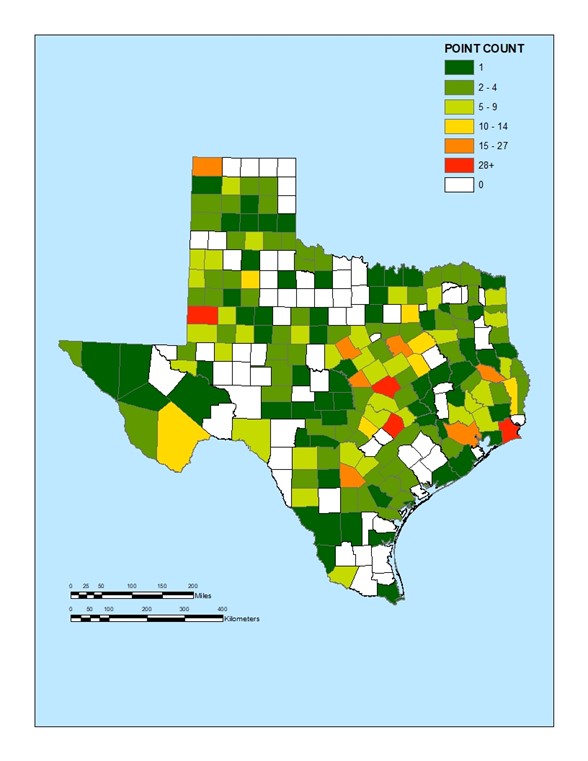
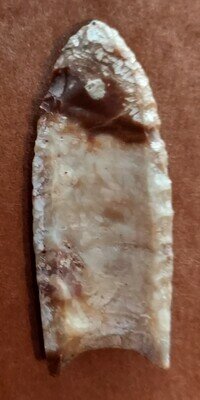
Clovis points are finely made, lanceolate-shaped projectile points recognized by their distinctive fluting—long, narrow channels removed from one or both faces of the point. These tools are among the earliest widespread artifact types in North America, typically dating to between 12,800 and 3,400 years ago. Clovis points are often associated with highly mobile hunter-gatherer groups who occupied diverse environments across the continent.
In Texas, they represent some of the earliest evidence of human presence, reflecting both regional adaptations and shared technological traditions within the broader Paleoindian cultural complex. The study of Clovis points provides critical insights into early technological organization, raw material selection, and the spatial distribution of early peoples across the state.
Folsom Points
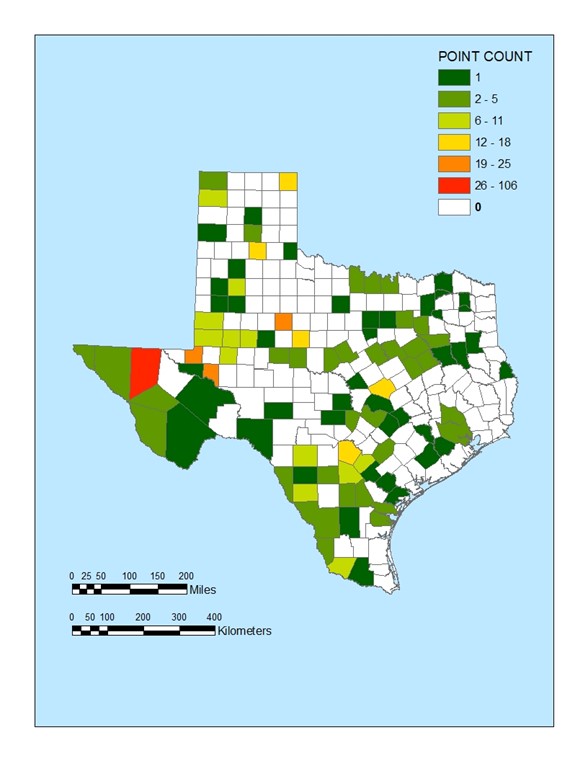
Folsom points are distinctive fluted projectile points that succeeded Clovis technology and are typically dated to around 12,800–12,000 years ago. Characterized by their narrower, more finely crafted forms and deep, parallel flutes extending nearly the full length of the blade. Folsom points represent a refined adaptation to changing environments and hunting strategies following the end of the Pleistocene.
In Texas, Folsom artifacts are frequently associated with bison hunting camps and kill sites, reflecting a shift toward specialized subsistence and more localized land-use patterns. The technological precision of Folsom fluting and the consistency of its manufacture across regions make these points an important indicator of cultural continuity and innovation during the early Holocene.

To participate in this survey contact Alan Slade at: Alan Slade can also be contacted at:
Forms can be mailed to Alan Slade at the following address:
Alan Slade
Texas Archaeological Research Laboratory
University of Texas at Austin
PRC Building 5, 10100 Burnet Rd.
Austin, Texas 78758
All submissions to this survey should have a completed Fluted Point Survey Record Sheet.
Please download the Record Sheet Guidelines and the record sheet below: